KapdaShop's Guide to Monsoon Fashion: Choosing the Right Fabrics
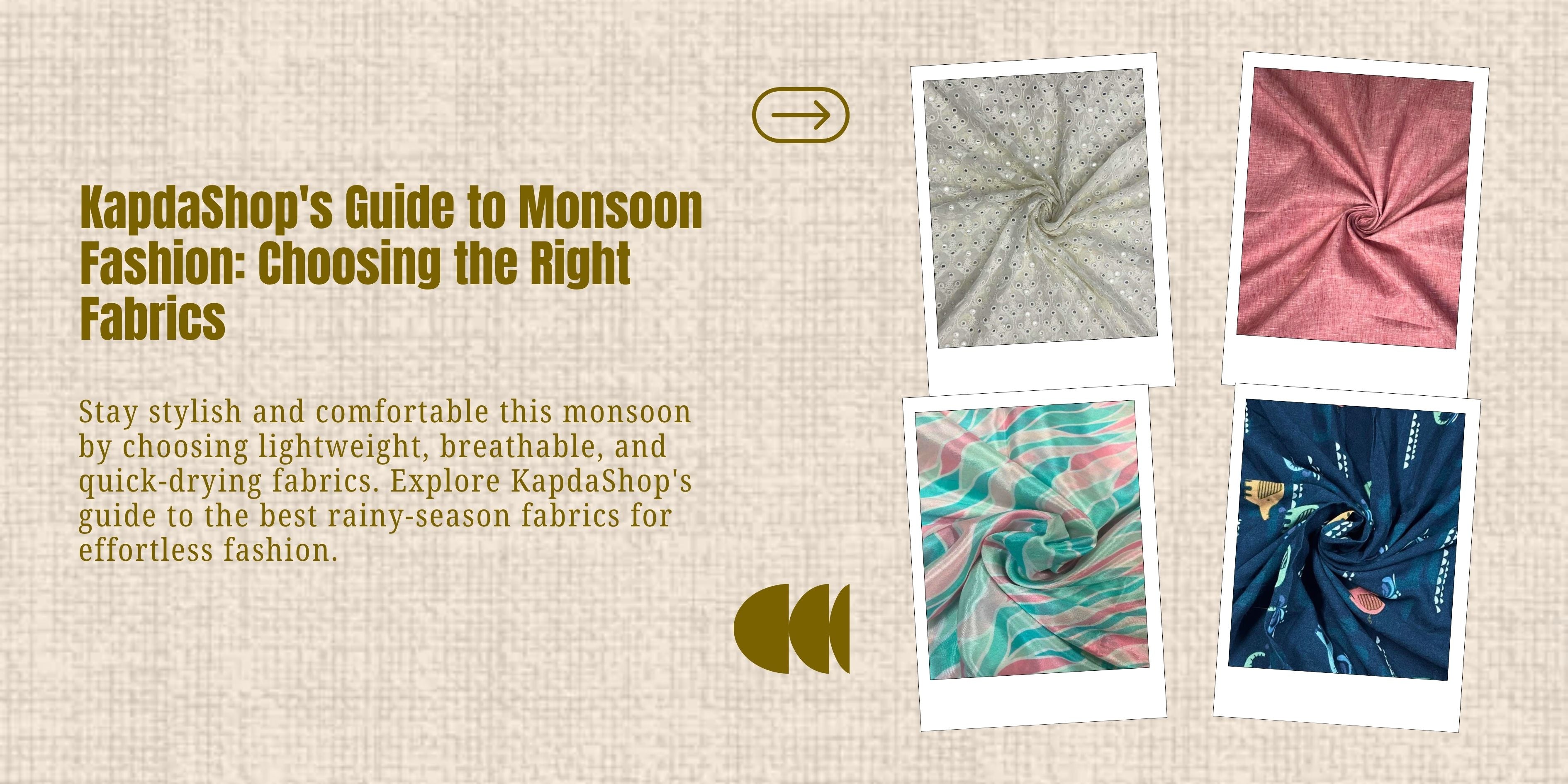
The secret to dressing well during the rainy season lies in selecting the right fabrics. Whether you're heading to work, attending a casual gathering, or planning festive outfits, choosing lightweight, quick-drying, and breathable materials can help you stay comfortable throughout the season.
At KapdaShop we understand that fashion should never compromise comfort. Here are some of the best fabrics to wear during the monsoon season.
1. Cotton Blends – Everyday Comfort
Cotton is often considered a wardrobe essential because of its softness and breathability. However, pure cotton tends to absorb moisture and may take longer to dry during heavy rains. This is where cotton blends become an excellent choice.
Cotton fabrics mixed with synthetic fibers offer better durability and quicker drying times while maintaining comfort. They are perfect for everyday kurtis, shirts, dresses, and casual wear.


Why choose cotton blends during the monsoon?
- Breathable and lightweight
- Comfortable for daily wear
- Easier to maintain than pure cotton
- Dries faster than regular cotton
2. Chiffon – Light and Elegant
If you're looking for something stylish without sacrificing comfort, chiffon is a great option. This lightweight fabric does not absorb much water and dries relatively quickly, making it ideal for rainy days.
Chiffon sarees and dupattas are especially popular during monsoon because they offer elegance without feeling heavy.


Why chiffon works well:
- Extremely lightweight
- Quick-drying properties
- Adds graceful movement to outfits
- Suitable for both casual and festive occasions
3. Georgette – Practical Yet Fashionable
Georgette is another monsoon-friendly fabric that combines practicality with sophistication. Its slightly textured finish prevents it from sticking to the skin, even in humid weather.
From ethnic wear to contemporary styles, georgette offers versatility and comfort throughout the season.


Benefits of georgette:
- Lightweight and breathable
- Wrinkle-resistant
- Dries quickly
- Perfect for sarees, suits, and dresses
4. Rayon – Soft and Flowing
Rayon has become increasingly popular because of its soft texture and excellent drape. It feels comfortable against the skin and is ideal for creating stylish monsoon outfits.
While rayon absorbs some moisture, its lightweight nature allows it to dry faster compared to heavier fabrics.


Why rayon is a good choice:
- Soft and comfortable
- Offers excellent drape
- Suitable for casual and semi-formal wear
- Available in a variety of prints and designs
5. Linen Blends – Breathable Sophistication
Linen is loved for its breathable quality, making it suitable for humid weather. However, pure linen wrinkles easily and may require extra care. Linen blends provide the perfect balance between elegance and functionality.
These fabrics are ideal for shirts, co-ord sets, and smart casual outfits during the rainy season.


Advantages of linen blends:
- Excellent airflow
- Lightweight feel
- Sophisticated appearance
-
More practical than pure linen
Fabrics to Avoid During Monsoon
While some fabrics perform exceptionally well during rainy weather, others can make you feel uncomfortable.
Try avoiding:
- Heavy denim: Takes a long time to dry.
-
Velvet: Absorbs moisture and becomes heavy.
-
Pure silk: Requires delicate care and can get damaged easily.
-
Thick wool fabrics: Unsuitable for humid conditions.
Choosing the right fabric can significantly improve your comfort during the season.
Monsoon Fashion Tips
Apart from selecting suitable fabrics, these simple styling tips can make monsoon dressing easier:
Opt for darker colors
Darker shades help conceal unexpected water splashes and stains better than lighter colors.
Choose shorter hemlines
Ankle-length garments may collect dirt and rainwater. Mid-length styles are more practical.
Avoid excessive layering
The humidity during the monsoon can make layered outfits uncomfortable. Stick to breathable and lightweight clothing.
Prioritize easy-care fabrics
Select materials that require minimal maintenance and dry quickly after washing.
Keep accessories simple
Water-resistant footwear and minimal accessories are both practical and stylish during the rainy season.
Why Fabric Choice Matters During Monsoon
The rainy season often comes with increased humidity, sudden downpours, and fluctuating temperatures. Wearing inappropriate fabrics can lead to discomfort, skin irritation, and inconvenience.
The right fabrics help you:
- Stay fresh and comfortable throughout the day
- Reduce drying time after exposure to rain
- Maintain a polished appearance
-
Enjoy effortless style regardless of the weather
At KapdaShop, we believe that seasonal fashion should be both functional and fashionable. By choosing suitable fabrics, you can confidently embrace monsoon style without compromising comfort.
Frequently Asked Questions (FAQs)
1. Which fabric is best for the rainy season?
Chiffon, georgette, rayon, cotton blends, and linen blends are among the best fabrics for the monsoon season due to their lightweight, quick-drying properties.
2. Is cotton suitable for the monsoon?
Pure cotton absorbs moisture and may take longer to dry. Cotton blends are a better option, as they offer shorter drying times while maintaining comfort.
3. Can I wear chiffon sarees during the rainy season?
Yes. Chiffon sarees are an excellent choice for the monsoon because they are lightweight, elegant, and quick-drying.
4. Which fabrics should I avoid during the monsoon?
Avoid heavy fabrics like denim, velvet, thick wool, and delicate pure silk, as they tend to retain moisture and become uncomfortable.
5. How can I style outfits during monsoon?
Choose breathable fabrics, opt for darker shades, avoid heavy layering, and select practical silhouettes that are easy to manage during rainy weather.
6. Where can I find quality monsoon-friendly fabrics?
KapdaShop offers a variety of premium fabrics suitable for every season, helping you create stylish and comfortable outfits throughout the year.
Final Thoughts
Monsoon fashion doesn't mean sacrificing your personal style. It simply requires making smarter fabric choices that work with the season rather than against it.
Lightweight options like chiffon, georgette, rayon, cotton blends, and linen blends offer the perfect combination of comfort, practicality, and elegance. By investing in the right fabrics, you can create outfits that keep you looking stylish while staying prepared for unpredictable weather.
At KapdaShop, we offer a wide range of quality fabrics designed to help you create beautiful outfits for every season. This monsoon, refresh your wardrobe with fabrics that let you enjoy the rain without worrying about your style.