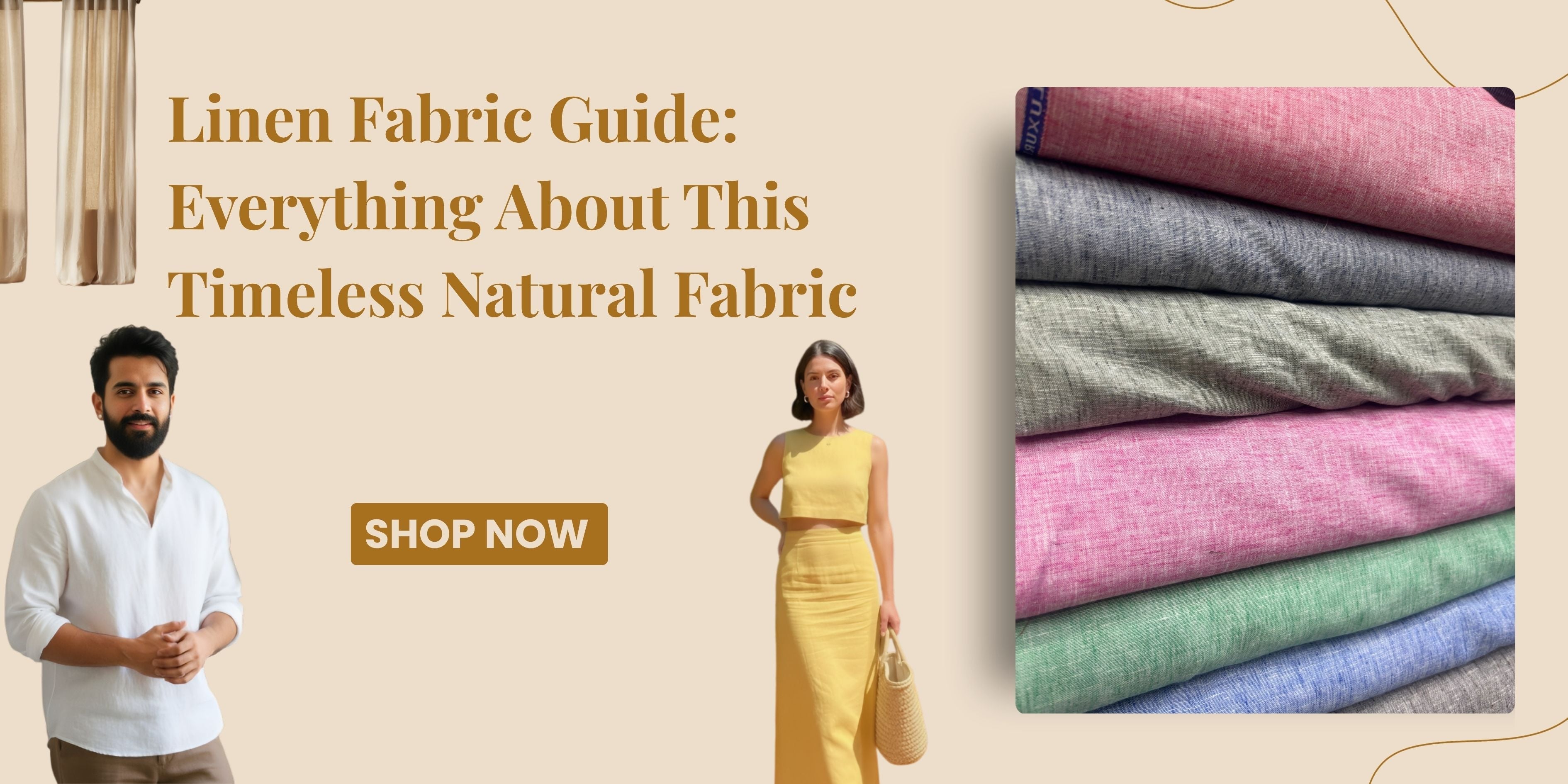
Linen Fabric Guide: Everything About This Timeless Natural Fabric
What is Linen Fabric?
How is Linen Fabric Made?
1. Retting
After harvesting, the flax stalks undergo a process called **retting**. This helps loosen the Fibres from the plant's woody part. Retting may be done using moisture, depending on the traditional or modern production method.
2. Breaking and Scutching
Once retting is complete, the dried stalks are mechanically broken. The woody outer parts are then removed in a process called **scutching**, leaving behind the useful flax Fibres.
3. Hackling
The Fibres are then combed or “hackled” to separate and straighten them. This helps create cleaner, longer Fibres that can be spun into yarn.
4. Spinning and Weaving
Key Properties of Linen Fabric
Linen is popular not just because it looks beautiful, but because it offers several useful qualities.
Breathable and Airy
Linen is highly breathable, which makes it an excellent choice for warm weather. It allows air to circulate instead of trapping heat against the skin.
Excellent Moisture Absorption
Linen can absorb moisture efficiently and dries relatively quickly. This is one reason why it feels comfortable during hot summer days.
Lightweight Feel
Many linen fabrics have a light and airy feel, making them perfect for relaxed silhouettes and summer clothing.
Strong and Durable
Linen Fibres are naturally strong. With proper care, linen garments and home textiles can last for years.
Naturally Textured
One of linen’s most Recognisable features is its slightly crisp, textured appearance. It gives outfits and interiors a relaxed yet premium character.
Gets Softer With Use
Linen often becomes softer and more comfortable over time. Instead of losing its appeal, well-used linen can develop an even more beautiful hand feel.
Naturally Wrinkles
Linen wrinkles easily, but that is not necessarily a disadvantage. Those natural creases are often considered part of the fabric’s effortless, lived-in aesthetic.
Where is Linen Fabric Used?
Linen is incredibly versatile and can be used in both fashion and interiors.
Clothing
Linen is widely used to make:
* Shirts and tops
* Dresses
* Trousers and pants
* Co-ord sets
* Skirts
* Sarees
* Kurtas and ethnic wear
* Jackets and lightweight layers
Its breathable nature makes it particularly useful for summer wardrobes.


Home Décor
Linen is also a popular choice for home textiles, including:
* Curtains
* Cushion covers
* Table runners
* Tablecloths
* Bedsheets
* Napkins
* Upholstery
Its natural texture can instantly give a room a calm, sophisticated, and understated look.


Accessories
Depending on the weave and weight, linen can also be used for bags, scarves, kitchen textiles, and other lifestyle accessories.
At Kapdashop, linen is a great option for anyone looking to create outfits or décor pieces that combine natural texture with everyday comfort.
Linen vs Cotton: Which is Better?
How to Care for Linen Fabric
Linen is durable, but proper care can help maintain its quality longer.
Always check the care instructions of the specific fabric or garment first. Generally, linen should be washed gently and handled carefully to avoid unnecessary wear.
Avoid excessive heat while washing or drying, especially if the fabric is prone to shrinkage. Linen can also be ironed while slightly damp if you prefer a smoother appearance. On the other hand, many people simply embrace its natural wrinkles.
Frequently Asked Questions About Linen Fabric
Is linen fabric good for summer?
Yes. Linen is one of the most popular natural fabrics for summer because it is breathable, lightweight, and absorbs moisture well.
Is linen better than cotton?
Neither is universally better. Cotton is often softer initially, while linen is known for its breathability, strength, and distinctive texture. Your choice should depend on the type of garment or project you are creating.
Does linen shrink?
Linen can shrink, particularly when exposed to high temperatures. Pre-washed or pre-shrunk linen is generally easier to manage, but care instructions should always be followed.
Why does linen wrinkle so much?
Linen fibres have a natural structure that makes them more prone to creasing. These wrinkles are often considered part of linen’s natural and relaxed look.
Is linen fabric durable?
Yes. Linen is known for its strong natural fibres and can be very durable when properly cared for.
Can linen be used for Indian ethnic wear?
Absolutely. Linen can work beautifully for kurtas, sarees, co-ord sets, shirts, dresses and other contemporary ethnic styles. Its lightweight feel is especially useful for warm Indian weather.