Article: Linen Fabric Guide: Properties, Benefits & Uses You Should Know
Linen Fabric Guide: Properties, Benefits & Uses You Should Know
Linen is one of those fabrics that never really goes out of style. It feels natural, looks effortlessly elegant, and becomes even more comfortable with time. From breezy summer outfits and kurtas to dresses, shirts, sarees, curtains, and home décor, linen works beautifully across fashion and interiors.
But what actually makes linen special? Why does it feel so comfortable in warm weather? And is it really as durable as people say?
If you’re thinking about buying linen fabric for your next project, here’s everything you should know about its properties, benefits, uses, and care.
What Is Linen Fabric?
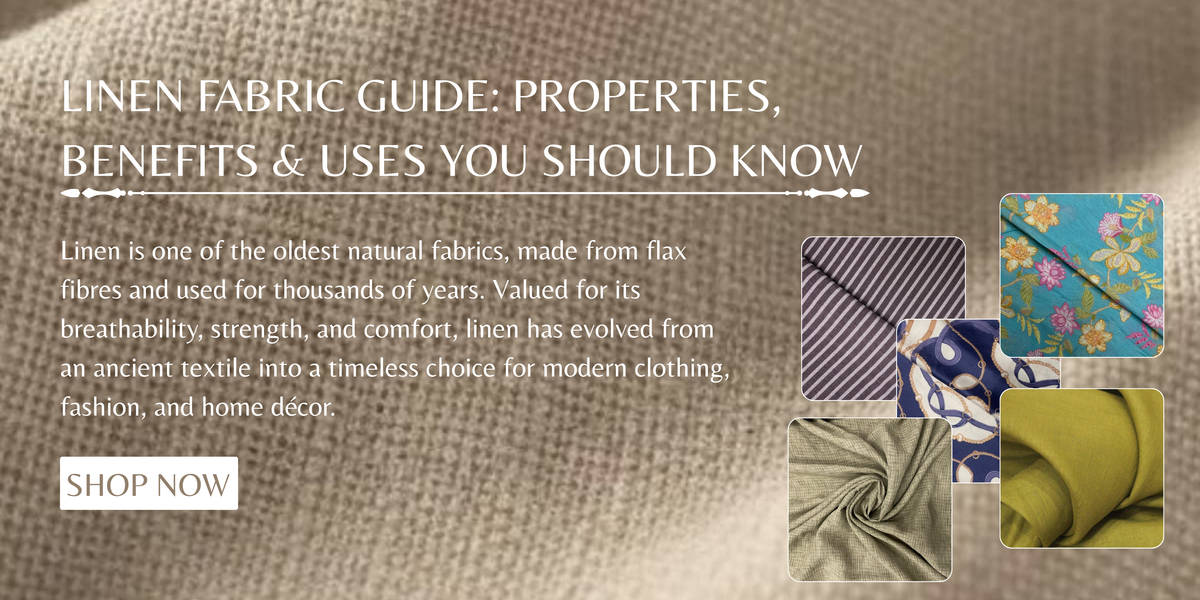
Linen is a natural fabric traditionally made from the fibres of the flax plant. Flax fibres are extracted from the plant, processed, spun into yarn, and then woven to create linen fabric.
One of linen’s most recognisable features is its slightly textured appearance. Unlike fabrics designed to look perfectly smooth, linen often has subtle variations in its weave. These natural characteristics give it a relaxed yet premium look.
And yes, those little wrinkles are part of linen’s personality!


Key Properties of Linen Fabric
1. Highly Breathable
Breathability is one of linen’s biggest strengths. Its structure allows air to circulate through the fabric, which helps reduce that sticky, uncomfortable feeling associated with hot weather. This makes linen an excellent choice for summer clothing and everyday outfits in warmer climates.
Think linen shirts, kurtas, dresses, trousers, and co-ord sets that look polished without feeling unnecessarily heavy.
2. Excellent Moisture Absorption
Linen can absorb moisture effectively while still feeling relatively comfortable against the skin. This property makes it particularly useful for clothing worn during warm and humid conditions. Instead of trapping moisture close to the body, linen helps manage it more efficiently. That is one reason linen continues to be a favourite for summer wardrobes.
3. Naturally Strong and Durable
Don’t let linen’s lightweight feel fool you. Flax fibres are naturally strong, which gives good-quality linen impressive durability. With appropriate care, linen garments and household textiles can last for years. This durability also makes linen suitable for products that see regular use, including trousers, shirts, table linen, cushion covers and curtains.
4. Becomes Softer With Use
Some fabrics gradually lose their charm after repeated washing. Linen often does the opposite. Fresh linen can initially feel slightly crisp, but regular washing and wearing usually make it softer and more comfortable. Over time, the fabric develops a relaxed feel that many people specifically love about linen. In other words, linen is one of those fabrics that can actually become more enjoyable as you use it.
5. Lightweight and Comfortable
Depending on its weave and GSM, linen can range from light and airy to comparatively structured. Lightweight linen works wonderfully for summer dresses, shirts, kurtas, and relaxed silhouettes, while heavier varieties are well-suited to trousers, jackets, upholstery, and décor. This versatility gives designers plenty of room to experiment with different looks.
6. Distinctive Natural Texture
Linen doesn't need to be perfectly smooth to look beautiful. Its characteristic texture gives garments an organic, sophisticated appearance. This is particularly attractive in minimalist fashion, resort wear, Indo-western outfits, and relaxed everyday clothing. The natural texture can make even a simple silhouette look thoughtfully styled.
7. Linen Wrinkles Easily
Here comes the property everyone notices: linen wrinkles. Because linen fibres have relatively low elasticity, the fabric tends to crease more easily than many synthetic materials. But that isn't necessarily a disadvantage. For many designers and linen lovers, the slightly crumpled appearance is part of its charm. If you prefer a sharper finish, ironing or steaming can help maintain a cleaner appearance.
What Can You Make With Linen Fabric?
Linen is incredibly versatile, so you're certainly not limited to basic shirts. For fashion, you can use linen to create kurtas and kurta sets, shirts, tops, dresses, trousers, co-ord sets, skirts, sarees, jackets, tunics, and relaxed summer outfits. Linen can also work beautifully for home décor projects such as curtains, table runners, napkins, cushion covers, and other decorative textiles. The right choice depends on the linen's weight, weave, texture, and intended application.
Why Is Linen Great for Indian Weather?
Indian summers can be demanding, especially when temperatures and humidity rise together. That's where linen performs particularly well. Its breathability, moisture management, and comfortable natural feel make it suitable for warm-weather dressing. For everyday wear, you can choose simple linen kurtas, shirts, or trousers. For more elevated occasions, linen can also be styled with embroidery, statement accessories, interesting cuts, or layered silhouettes. It delivers comfort without forcing you to compromise on style.
How to Care for Linen Fabric
Good care can help your linen pieces look beautiful for longer. Always check the specific care instructions for the fabric or finished garment first. In general, linen benefits from gentle washing with mild detergent. Avoid unnecessarily harsh chemicals, and don't over-dry the fabric. If you enjoy linen's natural relaxed texture, you may not need heavy ironing at all. If you prefer a crisp appearance, iron it while it is slightly damp or use a steamer. For sewing projects, pre-washing the fabric can also be useful because natural fabrics may experience some shrinkage.

Is Linen Sustainable?
Linen is often discussed as a more environmentally conscious fabric option because it is traditionally produced from flax, a natural plant fibre. However, sustainability isn't determined by fibre type alone. Farming practices, processing, dyeing, manufacturing, transportation, and the lifespan of the finished product all matter. One major advantage of good-quality linen is durability. A fabric that can be worn and used repeatedly over a long period may reduce the need for frequent replacement. So rather than treating every linen product as automatically sustainable, it is better to consider its complete production and usage lifecycle.
FAQs About Linen Fabric
1. Is linen good for summer?
Yes. Linen is highly breathable and manages moisture well, making it an excellent fabric for warm and humid weather.
2. Does linen shrink after washing?
Linen can shrink, particularly during its first few washes. If you're purchasing linen for stitching, pre-washing before cutting can help account for potential shrinkage.
3. Why does linen wrinkle so easily?
Linen fibres have relatively low elasticity, which means the fabric doesn't bounce back from folds as easily as some other materials. This creates its characteristic creased appearance.
4. Is linen suitable for daily wear?
Absolutely. Linen shirts, kurtas, dresses, trousers, and co-ord sets can all work well for regular wear, particularly during warmer months.
5. Does linen become softer over time?
Yes. One of linen's most appealing characteristics is that it generally becomes softer and more comfortable with repeated washing and use.
6. Is linen better than cotton?
Neither fabric is universally better. Both have different qualities. Linen is particularly valued for breathability, strength, and its distinctive texture, while cotton offers its own advantages in softness, versatility, and availability. Your ideal choice depends on what you're making.
7. Can linen be used for festive outfits?
Yes. Linen doesn't have to be limited to casual clothing. Depending on the fabric and design, it can be combined with embroidery, borders, statement sleeves, dupattas, or contemporary silhouettes to create elegant festive looks.
Final Thoughts
Linen combines comfort, durability, and effortless style in a way few fabrics can. It's breathable enough for summer, strong enough for regular use, and versatile enough to move from casual shirts and kurtas to dresses, co-ords, sarees, and home décor. Its natural texture and signature wrinkles aren't imperfections—they're part of what gives linen its distinctive character. Whether you're a designer planning a new collection, a boutique owner sourcing fabrics, or simply someone who enjoys creating customised outfits, choosing the right linen can open up plenty of creative possibilities.
Explore linen fabrics at KapdaShop and turn your next fabric idea into something worth wearing.